


The state of agriculture in India today is the result of sustained efforts made during the 1960s and 1970s, the years of the green revolution. With the green revolution, hybrid Mexican wheat seeds were introduced in India. The variety was of dwarf size, and it took less time to mature. However, it required significant pest control measures and fertilizers, particularly Urea. With this hybrid variety of wheat, the yield grew exponentially over the years and significantly contributed to the food security of the Indian populace.
In the subsequent years, agriculture veered away from the focus of policymakers' attention, and non-agriculture sectors took up the brain space.
Despite booming output, a crisis, both economic and psychological, settled in the agriculture sector that ultimately impacted the well-being of the 65 crore people directly associated with farm activities.
The economic reforms initiated in the country during the early 1990s have put the economy on a higher growth trajectory. However, the share of agriculture in the GDP shrank over the years.
Presently, the agriculture sector in India is experiencing a double whammy. First is economic viability, and second is competitiveness. The challenges the agriculture sector is faced with are listed below:
- Enhancing agricultural productivity, competitiveness, and rural growth
- Reducing rural poverty through a socially inclusive strategy that comprises both agriculture as well as non-farm employment
- Ensuring that agricultural growth responds to food security needs
- Improving Water Resources and Irrigation/Drainage Management
- Facilitating agricultural diversification into higher-value commodities like medicinal crops, exotic crops, etc.
- Promoting high-growth commodities
- Developing markets, agricultural credit, and public expenditures
- Sustaining the environment and future agricultural productivity.
Keeping the challenges in mind, HAHNEMANN CHARITABLE MISSION SOCIETY (HCMS) was set up in 1996 in Jaipur, Rajasthan. Since its establishment, HCMS has carried out numerous activities, both directly and indirectly, to address these challenges. Hahnemann Charitable Mission Society is a professionally managed ISO-certified organization.
HCMS operates a team of experts in the areas of crop production, plant protection, post-harvest handling, technology transfer and extension, business development, and information extension. We aid in the promotion of the cultivation of medicinal and aromatic plants. In India, we share knowledge and innovative technologies with farmers for the scientific cultivation of medicinal and aromatic plants. We have footprints across India and several foreign locations.
Based at Jaipur (Rajasthan) HCMS has emerged as an initiator, facilitator, and service provider for agriculture and allied activities. We are taking pioneering steps to promote and develop organic, medicinal, horticultural, sustainable agriculture, and aromatic plant cultivation, and wasteland development. HCMS is also engaged in the export of various agricultural products, planting materials, food products, medicinal herbs, seeds, fertilizers, pesticides, and consultancy services to the UK, USA, UAE, South Africa, Europe, Australia, and Asian countries.
Organizational Presence
At the HQ of Hahnemann Charitable Mission Society, located in Jaipur (Rajasthan), a team of experts brainstorm to address queries of farmers, land growers, farm owners, and agro-entrepreneurs and provide solutions. With our extensive network of collaborators in India and abroad, we are able to provide centrally coordinated research.
Pioneering Work In Stevia
HCMS has successfully set up the processing unit for STEVIA STEVIOSIDE, ALOEVERA GEL, HERBAL JUICES, ALOEVERA POWDER, LEMON GRASS OIL, and other medicinal materials. For nearly 40 years, millions of consumers in Japan, India, the USA, the EU, and Brazil, where stevia is approved as a food additive, have been using stevia extract as a safe, natural, non-caloric sweetener. We are promoting Stevia on more than 2000 acres under our consultancy. Aloevera, also known as medicinal aloe, grows in arid climates and is widely produced in Africa, India, and other arid areas. We are promoting Aloevera on more than 2000 acres under our consultancy.
INTERNATIONAL INSTITUTE OF ADVANCED AGRICULTURE SKILL DEVELOPMENT (IIAASD)
Seeded as an NGO by Dr. Atul Gupta, HCMS expanded its roots and developed as a canopy tree, world’s first-of-its kind training and capacity-building centre INTERNATIONAL INSTITUTE OF ADVANCED AGRICULTURE SKILL DEVELOPMENT (IIAASD).
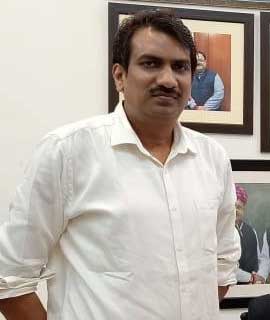
Dr. Atul Gupta is an eminent Agriculture Scientist, Agri-Entrepreneur, Brand Owner, class leading Agriculture Trainer, Leading light in Organic Farming, Farming Community Leader and a Motivation Speaker. His work in organic farming and agriculture economics has been widely appreciated globally. Dr. Gupta nurtures the vision to transform his native state Rajasthan (India) into 100% organic by the year 2030 and contribute to the mandate of doubling the farmers’ income.
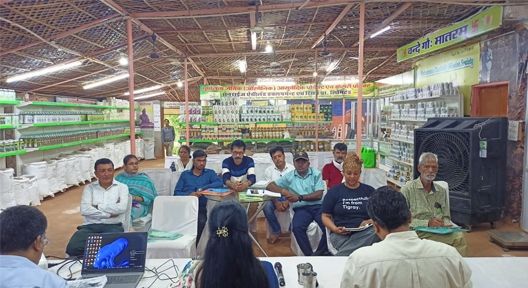
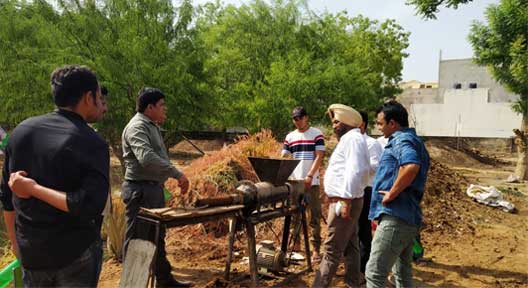
IIAASD, based at Jaipur (Rajasthan) provides training on sixteen certificate courses in the domain of commercial cultivation of medicinal crops and organic farming to the students, agri-entrepreneurs, agri-professionals, and farmers.
In excess of 10,000 farmers from across world have been trained at IIAASD to become entrepreneurs. Institute has also trained 40,000 participants to become financially independent.
Established in Year 2010, IIAASD have evolved over the years as a professionally run institute with qualified staff to align skills and experience with the vision to equip farmers and agri entrepreneurs with the know-how critical for sustainable and viable agriculture.
IIAASD aims to share low-cost farming practices and knowledge so that farmers can get high value for their products. Farmers and agri-entrepreneurs from across the country are taking online courses as well as offline field training on relevant subjects.
Founder of IIAASD